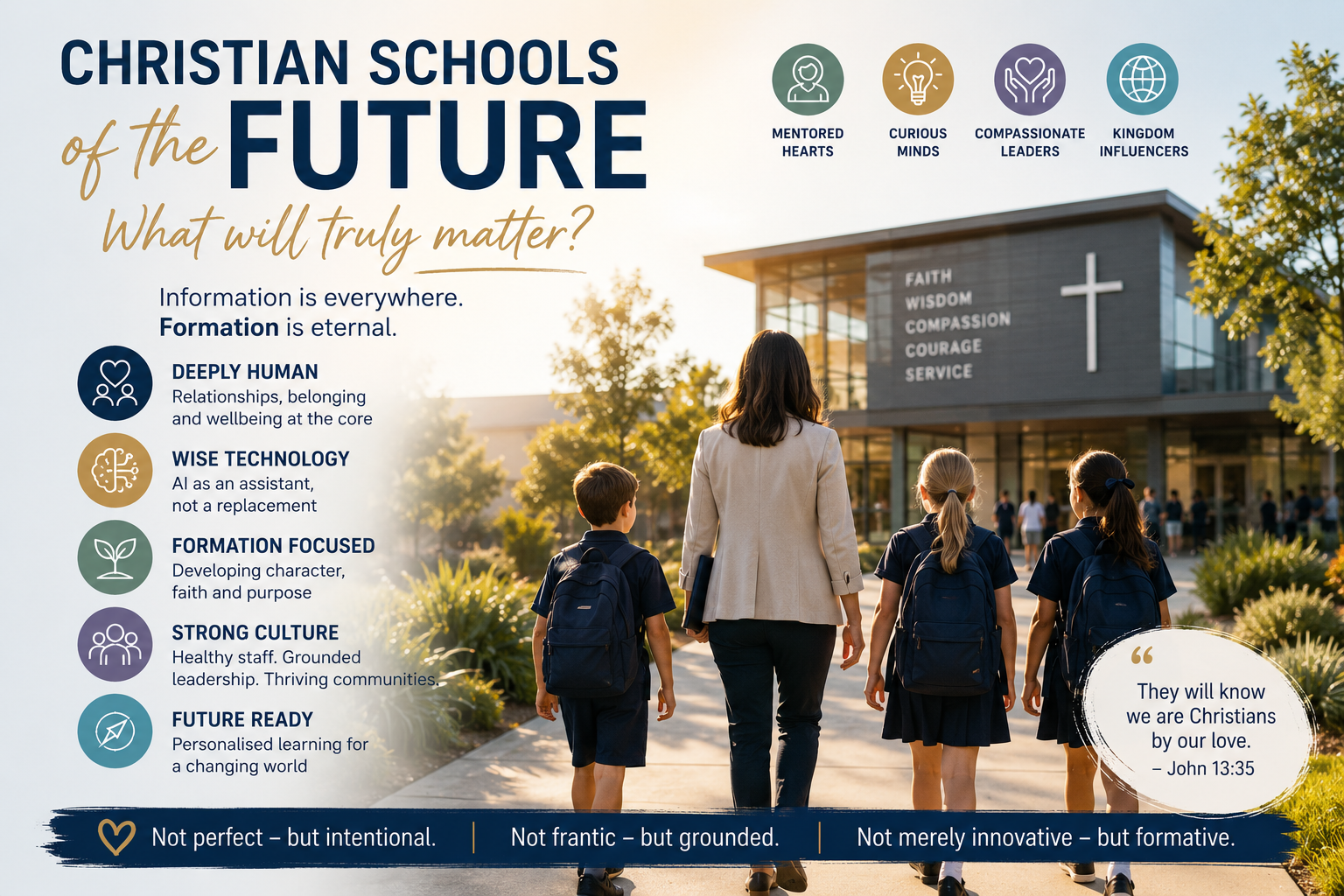
Christian Schools of the Future: What Will Truly Matter?
The article argues that education is undergoing a significant shift, driven by rising complexity, staff burnout, and rapid advances in AI. Traditional, industrial models of schooling—focused on standardisation and information delivery—are no longer sufficient. The future of Christian education will not centre on information, but on formation. As AI takes over administrative and content-driven tasks, the role of schools and teachers becomes more human, relational and purposeful. Christian schools are uniquely positioned to meet the growing demand for belonging, identity, values and meaning. To thrive, future schools must: prioritise staff wellbeing and sustainable leadership embrace AI wisely without losing human connection personalise learning pathways focus on developing character, resilience and faith build strong, healthy, values-driven cultures The most successful schools will become formation communities where students are known, nurtured and shaped holistically. The article emphasises that this moment is not just disruptive, but deeply missional. Christian schools have a unique opportunity to offer hope, wisdom and grounded identity in an increasingly uncertain world. Ultimately, flourishing schools will be: intentional, not reactive grounded, not frantic formative, not merely innovative Healthy leadership is central to this future, and leaders will need ongoing support, reflection and sustainable rhythms to lead well.
Continue reading
The Wellbeing of Christian School Leaders: A National Conversation That Needs to Begin
Christian school leaders carry significant responsibility within their communities, yet little research has explored their wellbeing. The Australian Christian School Leadership Wellbeing Survey seeks to better understand the pressures, challenges, and sustainability of Christian school leadership so that leaders can be better supported in the important work they do.
Continue reading
Why School Leaders Need Structured Pastoral Care Now
Principals are carrying extraordinary responsibility — often quietly. With rising workload, increasing critical incidents, and growing wellbeing concerns across the sector, leadership sustainability is under pressure. It’s time to move beyond ad-hoc support and consider structured pastoral care as a proactive solution.
Continue reading